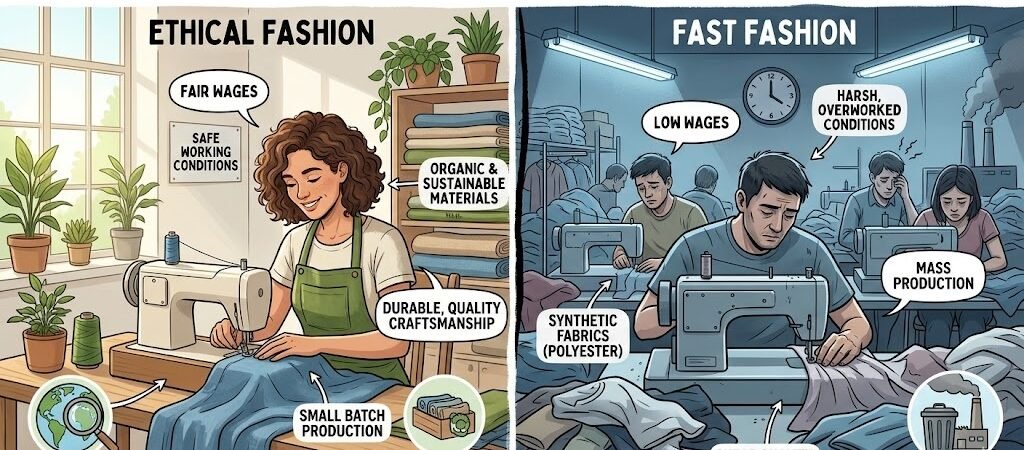
The modern wardrobe has undergone a radical transformation over the last few decades. Gone are the days when buying new clothes was a rare, seasonal event. Today, a new outfit is just a click away, often costing less than a morning coffee.
This shift is the result of the rise of fast fashion—a hyper-efficient business model that has democratized style but left a trail of environmental and social devastation in its wake. In response, a growing counter-movement known as ethical fashion has emerged.
Understanding the stark differences between these two approaches is essential for anyone looking to make conscious, impactful choices about what they wear.
What is Fast Fashion?
Fast fashion describes a high-volume, rapid-production business model that replicates catwalk trends and high-end designs at breakneck speed and low costs.
- The Goal: To get the latest trends from the design board to retail shelves (and online carts) as quickly as possible while maximizing profit margins.
- The Strategy: Utilizing cheap synthetic materials, outsourcing production to developing nations with lax labor laws, and introducing dozens of “micro-seasons” a year to keep consumers feeling constantly outdated.
What is Ethical Fashion?
Ethical fashion is an umbrella term for garment design, production, and distribution that focuses on reducing harm to people, animals, and the planet.
- The Goal: To create a sustainable, equitable clothing ecosystem where style does not come at the expense of human rights or ecological health.
- The Strategy: Prioritizing fair wages, safe working conditions, transparent supply chains, and low-impact, sustainable materials.
Key Differences: Side-by-Side Comparison
To truly grasp how these two models contrast, we have to look at the pillars of production: people, planet, and product lifespan.
| Feature | Fast Fashion | Ethical Fashion |
|---|---|---|
| Production Speed | Ultra-fast; styles change weekly. | Slow; focused on timeless, seasonal collections. |
| Labor Practices | Often exploits low-wage workers; unsafe conditions. | Fair trade; ensures living wages and safe environments. |
| Materials Used | Cheap synthetics (polyester, nylon, acrylic). | Organic, recycled, or biodegradable natural fibers. |
| Environmental Impact | High carbon footprint, water pollution, massive waste. | Lower carbon footprint, water conservation, eco-friendly dyes. |
| Cost & Quality | Inexpensive, low-quality (designed to break down). | Higher upfront cost, premium quality (built to last). |
Breaking Down the Impact
1. The Human Cost (Labor Ethics)
The most profound dividing line between these two models is how they treat human beings.
- Fast Fashion: To keep retail prices incredibly low, brands squeeze manufacturing costs. This often leads to sub-contracting factories in developing countries where workers—predominantly women—face systemic exploitation. This includes working grueling hours, earning far below a living wage, and operating in hazardous buildings without basic safety protections.
- Ethical Fashion: Centers human dignity. Brands committed to ethical practices work transparently with certified factories (such as Fair Trade or SA8000 certified). This ensures that the people spinning the yarn, cutting the fabric, and sewing the seams are paid fair wages, treated with respect, and given a safe, healthy workplace.
2. Environmental Footprint
The fashion industry is one of the world’s largest polluters, but the blame is not shared equally.
- Fast Fashion: Thrives on synthetic fabrics like polyester, which are derived from fossil fuels and shed millions of microplastics into our oceans with every wash. The heavy chemical dyes used to color these clothes are frequently dumped directly into local waterways, poisoning ecosystems.
- Ethical Fashion: Seeks to work with nature. It relies heavily on sustainable textiles like organic cotton (which uses significantly less water and zero toxic pesticides), linen, hemp, and Tencel. Production methods focus on closed-loop systems, meaning water and non-toxic solvents are recycled and reused rather than dumped.
3. Waste and the “Throwaway” Culture
What happens to a garment after it is purchased defines its ultimate impact on the earth.
- Fast Fashion: Built on planned obsolescence. Because the garments are cheaply made, they quickly lose their shape, shrink, or unravel, prompting consumers to throw them away. This has created a global waste crisis, with millions of tons of textiles ending up in landfills or being burned every single year.
- Ethical Fashion: Champions circularity and longevity. Clothes are crafted with care and premium materials, meaning they are designed to remain in your wardrobe for years. Ethical fashion encourages a “buy less, choose well, make it last” philosophy, urging consumers to repair, resell, or recycle garments rather than discard them.
Making the Shift
Transitioning away from fast fashion doesn’t mean you have to completely replace your wardrobe overnight—in fact, using what you already own is the most sustainable option available.
Moving toward an ethical wardrobe is about a mindset shift. It means researching brands before you buy, looking for transparency certifications, prioritizing quality over quantity, and viewing your clothing as an investment in the future of the planet and the people who inhabit it.