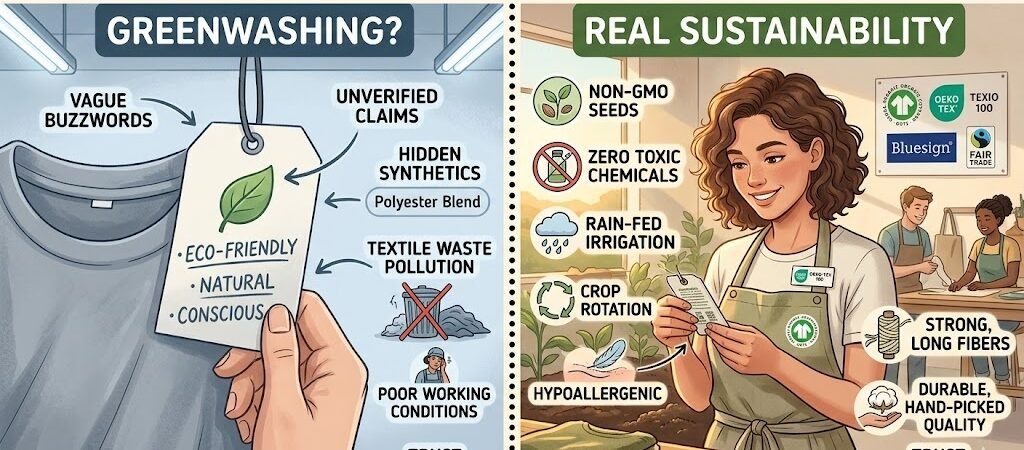
When shopping for new apparel, a quick glance at the clothing tags often reveals a choice between two common materials: organic cotton and conventional (regular) cotton. While they may look and feel remarkably similar on the retail hanger, their production lifecycles, environmental footprints, and long-term impacts tell two entirely different stories.
As consumers look closer at the true cost of their wardrobes, understanding the difference between these two textiles is essential for building a truly mindful closet.
What is Regular Cotton?
Conventional or regular cotton is one of the most widely used natural fibers in the world. However, its industrial manufacturing process is highly maximized for speed, volume, and low cost. Regular cotton farming relies heavily on genetically modified (GMO) seeds designed to withstand heavy chemical applications, making it one of the most chemically intensive crops on earth.
What is Organic Cotton?
Organic cotton is grown utilizing methods and materials that maintain ecological balance and minimize environmental harm. It is produced without the use of toxic, synthetic pesticides, herbicides, or genetically modified organisms. To be officially recognized as organic, the entire supply chain—from farming to processing—must adhere to strict third-party certification standards, such as the Global Organic Textile Standard (GOTS).
Key Differences: Side-by-Side Comparison
| Feature | Organic Cotton | Regular Cotton |
|---|---|---|
| Seed Variety | Non-GMO (Natural seeds) | Genetically Modified (GMO) seeds |
| Pesticides & Chemicals | Zero toxic, synthetic chemicals used | Heavy reliance on synthetic pesticides & insecticides |
| Water Consumption | Primarily rain-fed; preserves soil moisture | Intensive irrigation; high water waste |
| Soil Health | Uses crop rotation; builds fertile, living soil | Monoculture farming; depletes soil nutrients |
| Skin Friendliness | Hypoallergenic; free from chemical residues | Can retain trace toxins; prone to irritating sensitive skin |
| Durability | Higher durability (fibers are unbroken by chemicals) | Lower durability (weakened by aggressive chemical processing) |
The Core Areas of Impact
1. Environmental Footprint & Soil Health
The way cotton is farmed drastically alters the local landscape.
- Regular Cotton: Conventional farming utilizes a “monoculture” method, meaning the same crop is planted on the same plot of land year after year. This rapidly strips the soil of its natural nutrients. To compensate, farmers must apply massive quantities of synthetic fertilizers, which ultimately run off into local ecosystems, polluting nearby rivers, lakes, and drinking water sources.
- Organic Cotton: Organic farmers utilize crop rotation, planting different crops in cycles to naturally keep the soil healthy, fertile, and rich in nutrients. Healthy soil acts like a natural sponge, retaining water far more efficiently and making the crops significantly more resilient against droughts.
2. Water Usage
Water scarcity is one of the most critical challenges facing global agriculture, and cotton is notoriously thirsty.
- Regular Cotton: Growing conventional cotton requires an astronomical amount of water, heavily draining local aquifers. For perspective, it takes thousands of liters of water to produce a single conventional t-shirt, largely due to inefficient, intensive surface irrigation systems.
- Organic Cotton: According to environmental impact data, organic cotton uses substantially less blue water (surface and groundwater) than regular cotton. Because the soil is healthier and retains moisture better, organic cotton fields are heavily rain-fed, putting far less strain on local community water supplies.
3. Human Health & Safety
The impact of cotton production extends directly to the people who grow it, the communities surrounding the fields, and the consumers who wear it.
- Regular Cotton: The agricultural runoff of synthetic pesticides puts field workers at high risk of chemical exposure. Furthermore, during the manufacturing phase, regular cotton is bleached, treated, and dyed with harsh chemicals (such as heavy metals and formaldehyde) to achieve specific textures or colors. Trace residues can remain in the fabric, potentially irritating sensitive skin.
- Organic Cotton: Safe agricultural environments preserve the health of farming communities. In the factory, organic processing relies on non-toxic, water-based, or natural dyes and safe whitening methods. The resulting fabric is completely hypoallergenic and exceptionally gentle, making it the ideal choice for infants, young children, and anyone dealing with skin sensitivities or eczema.
4. Fabric Quality and Longevity
The structural integrity of the individual cotton fiber changes based on how it is harvested and processed.
- Regular Cotton: Industrial conventional cotton is typically harvested by massive machines that can damage, break, and tear the delicate fibers. This machine harvesting, paired with aggressive chemical scouring and bleaching baths, weakens the natural fibers before the yarn is even spun. As a result, regular cotton garments are more prone to thinning, pilling, or losing their shape after a few spins through a washing machine.
- Organic Cotton: Organic cotton is frequently hand-picked with care. This preserves the full length and purity of every single fiber, keeping the structure completely intact. Without chemical degradation, the fibers remain long, flexible, and exceptionally strong, resulting in a finished garment that feels incredibly soft and lasts significantly longer.
The Verdict: Which Is Better?
While conventional cotton might offer a cheaper upfront price tag at check-out, the hidden costs to global water supplies, soil vitality, human health, and garment longevity are incredibly steep.
Investing in organic cotton is a vote for sustainable agriculture, cleaner waterways, safer working conditions, and clothing that stands the test of time. By intentionally choosing certified organic pieces, you actively help steer the fashion industry toward a cleaner, more responsible future.
http://googleusercontent.com/image_generation_content/186
There is a file you can reference named “watermarked_img_18667531405427834114.png”. Refer to this file by its name verbatim.