The modern wardrobe has undergone a radical transformation. Gone are the days when buying a new piece of clothing was a carefully considered, seasonal event. Today, high-street shops and e-commerce applications roll out thousands of new styles weekly, offering clothes at prices that feel almost disposable.
This is the world of fast fashion—a hyper-accelerated business model centered on rapid production, low quality, and high turnover. While it has democratized access to the latest trends, the hidden environmental tax we are paying for this convenience is astronomical.
From drying up entire rivers to choking oceans with synthetic fibers, here is a look at exactly how the fast fashion industry is destroying our planet.
1. Astronomical Water Consumption and Scarcity
The fashion industry is an incredibly thirsty business, ranking as one of the largest consumers of water globally. Fast fashion accelerates this strain on our planet’s most vital resource in two major ways:
- The Thirst of Conventional Cotton: A vast amount of fast fashion relies on conventional cotton. This crop demands intensive irrigation. To put it into perspective, it can take over 2,700 liters of water to produce a single conventional cotton t-shirt—enough water for one person to drink for roughly 900 days.
- Draining Natural Sources: This insatiable demand for agricultural water has devastated ecosystems. The most famous example is the Aral Sea in Central Asia, which has virtually disappeared and turned into a desert landscape due to heavy rivers being diverted for intensive conventional cotton irrigation.
2. Microplastic Pollution in Our Oceans
Decades ago, most garments were constructed from natural, biodegradable materials like linen, wool, or hemp. Today, fast fashion relies heavily on cheap, petroleum-derived synthetic fibers to keep manufacturing costs low:
- The Polyester Problem: Synthetic fabrics like polyester, nylon, and acrylic make up a massive percentage of modern cheap apparel.
- The Invisible Leak: Every single time these synthetic clothes are spun through a washing machine, they shed millions of microscopic plastic shards called microplastics. Because water treatment facilities cannot filter out pieces this small, these microplastics flow directly into our rivers, lakes, and oceans.
- Entering the Food Chain: Marine life routinely ingests these toxic particles. As a result, microplastics accumulate up the marine food chain, eventually making their way onto the plates of consumers worldwide.
3. Toxic Chemical Dyes and Waterway Pollution
To achieve vibrant hues and specific textures quickly, mass-manufactured garments go through heavy chemical processing.
Textile dyeing facilities frequently use toxic chemicals, heavy metals, and formaldehyde during production. In many manufacturing regions with lax environmental regulations, the untreated wastewater from these factories is dumped directly into local rivers. This leaves entire aquatic ecosystems toxic, kills off local biodiversity, and poisons vital water systems that nearby human communities rely on for agriculture and drinking.
4. Massive Carbon Footprint
The supply chain of a fast-fashion garment is a logistical nightmare spanning multiple continents. The raw fibers might be grown in one country, spun into yarn in another, woven into fabric elsewhere, sewn in a separate nation, and finally shipped globally to retail distribution warehouses.
This global transportation network, paired with the energy-intensive factories required to produce synthetic materials from fossil fuels, means that the fashion industry contributes to roughly 10% of global carbon emissions. That is more than all international flights and maritime shipping combined.
5. The Mountains of Textile Waste
Fast fashion is fundamentally built on planned obsolescence. Because garments are cheaply made from low-grade materials, they quickly lose their shape, shrink, or unravel after just a few washes.
This has cultivated a dangerous “throwaway culture.” Instead of treating clothing as a long-term investment, consumers treat apparel like single-use goods. The scale of the resulting waste crisis is staggering:
- Landfill Saturation: Millions of tons of clothes are tossed into household trash bins annually.
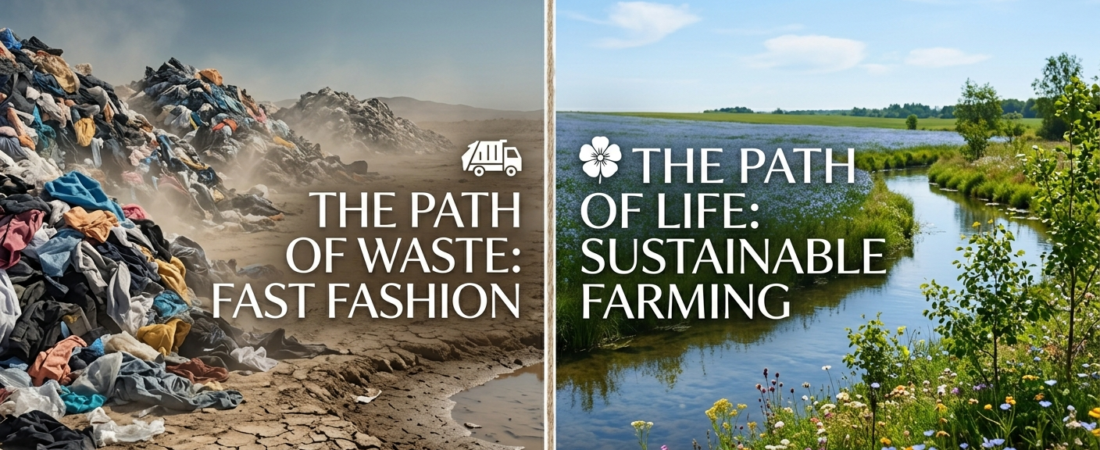
- The Incineration Crisis: Globally, the equivalent of one garbage truck full of textiles is landfilled or burned every single second.
- A Century to Decompose: Because synthetic fabrics like polyester are essentially plastic, garments sent to landfills do not degrade naturally. They sit in the earth for up to 200 years, slowly releasing greenhouse gases and leaching toxic chemical residues into the surrounding soil.
Shifting the Tide: What Can We Do?
The environmental degradation caused by the fast fashion system is severe, but the power to reshape the industry sits firmly in our hands as consumers. Systemic change begins with a shift in our personal daily habits:
- Embrace Slow Fashion: Shift your mindset from quantity to quality. Prioritize versatile pieces made from low-impact materials like organic cotton, linen, or hemp.
- Shop Second-Hand First: Thrifting or using online resale platforms extends the life of existing garments and prevents perfectly good clothing from choking landfills.
- Take Care of Your Wardrobe: Wash your clothes less frequently, use cold water, and learn basic mending skills to ensure your clothes last for years rather than weeks.
The most sustainable garment is always the one already hanging in your closet. By choosing quality over fleeting trends, we can collectively steer the fashion world toward a cleaner, greener future.