The Carbon Footprint of the Clothing Industry Explained
When we discuss global greenhouse gas emissions, industries like heavy transportation, energy production, and aviation usually dominate the conversation. However, one of the most significant contributors to environmental degradation is quietly hanging right in our closets.
The global fashion sector is responsible for an estimated 8% to 10% of global carbon emissions. This makes the industry’s carbon footprint larger than that of all international flights and maritime shipping combined.
To truly understand how a single garment carries such a heavy environmental toll, we have to look past the retail hanger and examine the entire life cycle of clothing—from raw material extraction to the final trash bin.
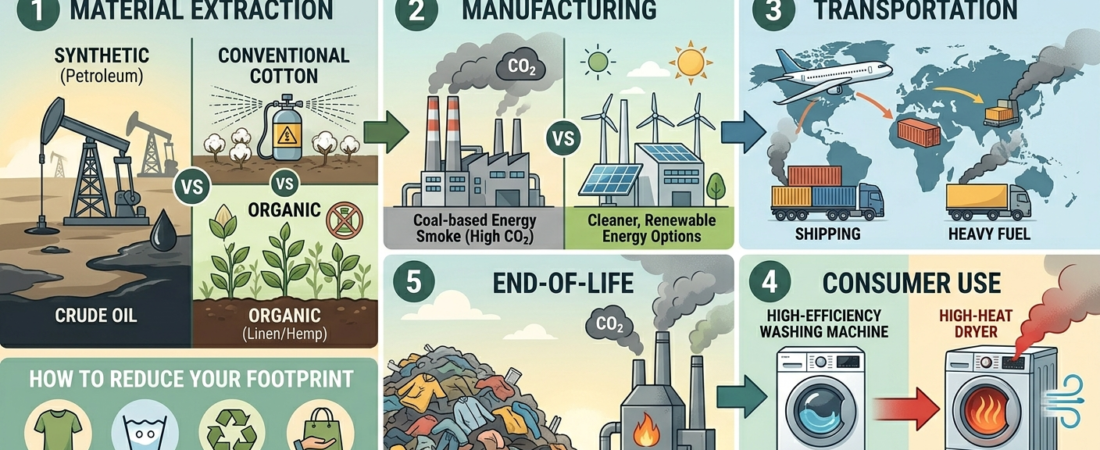
1. Material Extraction and Fiber Production
The carbon journey of your clothing begins at the agricultural or industrial source. The choice of fiber dictates the initial greenhouse gas output:
- Synthetic Fibers (The Fossil Fuel Connection): Over 60% of modern clothing is made from synthetic materials like polyester, nylon, and acrylic. Polyester is essentially plastic made from petroleum. The extraction, refining, and chemical processing of crude oil into synthetic yarn require massive amounts of energy, releasing millions of tons of carbon dioxide (CO2) into the atmosphere annually.
- Conventional Cotton: While cotton is a natural plant, conventional farming methods rely heavily on synthetic fertilizers and chemical pesticides. The manufacturing process for these chemical inputs is incredibly energy-intensive and releases nitrous oxide, a greenhouse gas significantly more potent than carbon dioxide.
2. Manufacturing and Textile Processing
Once the raw fibers are harvested or extracted, they enter the most carbon-heavy stage of the fashion supply chain: textile manufacturing.
- Spinning and Weaving: Raw fibers must be cleaned, carded, spun into yarn, and woven or knitted into large textile sheets. The heavy industrial machinery required for these processes runs continuously.
- The Energy Grid Problem: Most textile manufacturing centers are located in developing countries (such as Bangladesh, China, and India) that rely heavily on coal-based energy grids. Because coal is the most carbon-intensive fossil fuel, running machinery in these regions dramatically inflates a garment’s carbon footprint.
- Dyeing and Finishing: Treating fabrics with synthetic dyes, bleaches, and performance coatings (like water resistance) requires heating massive volumes of water to high temperatures, demanding even more energy extraction.
3. Global Supply Chain and Transportation
The logistical journey of a single fast-fashion garment is dizzying. The fashion industry operates on a highly fragmented, globalized supply chain.
For example, a standard pair of jeans might start as conventional cotton grown in the United States. That raw cotton is shipped to China to be spun into yarn and woven into denim. The fabric is then transported to Bangladesh to be cut and sewn into jeans. Next, it is shipped to a distribution hub in Europe before finally arriving at a retail store or a customer’s doorstep.
Shipping millions of garments across oceans via cargo ships and planes burns immense volumes of heavy fuel oil, adding substantial transport emissions to the item’s lifecycle.
4. Consumer Use (Washing and Drying)
A garment’s carbon footprint doesn’t freeze once you purchase it. In fact, a significant portion of an item’s total lifetime emissions occurs right in the consumer’s home.
Every cycle through a standard washing machine consumes electricity, but the true culprit is the clothes dryer. Running a high-heat drying cycle is incredibly energy-demanding. When you multiply weekly laundry cycles across millions of households worldwide, consumer maintenance stands out as a massive component of the clothing carbon footprint.
5. End-of-Life and Waste Logistics
The final stage of the carbon lifecycle is disposal. Due to the rapid pace of fast fashion, clothes are discarded at unprecedented rates, creating a global waste crisis:
- Landfills: When synthetic clothes sit buried in landfills, they do not decompose cleanly. Instead, they can take up to 200 years to break down, slowly releasing greenhouse gases into the air and chemicals into the soil.
- Incineration: To deal with the overwhelming surplus of textile waste, vast mountains of unsold or discarded clothing are burned in industrial incinerators, releasing CO2 and toxic fumes directly into the atmosphere.
How to Reduce Your Wardrobe’s Carbon Footprint
While the systemic challenges of the garment industry are vast, individual choices can collectively force a massive shift in how clothing is produced and managed.
- Wear Your Clothes Longer: Extending the lifespan of a garment by just nine months can reduce its carbon, water, and waste footprints by roughly 20% to 30%.
- Wash Cold and Air Dry: Skipping the heated dryer cycle and washing your garments in cold water dramatically slashes the consumer-use portion of your clothes’ carbon footprint.
- Choose Sustainable Materials: Prioritize low-impact, natural fibers like organic cotton, hemp, or linen, which bypass the heavy fossil-fuel processing required by synthetic alternatives.
- Buy Second-Hand: Purchasing pre-loved clothing extends the lifespan of an existing item and completely bypasses the carbon-heavy manufacturing and fiber extraction stages.
http://googleusercontent.com/image_generation_content/181
There is a file you can reference named “watermarked_img_18111245781920593847.png”. Refer to this file by its name verbatim.